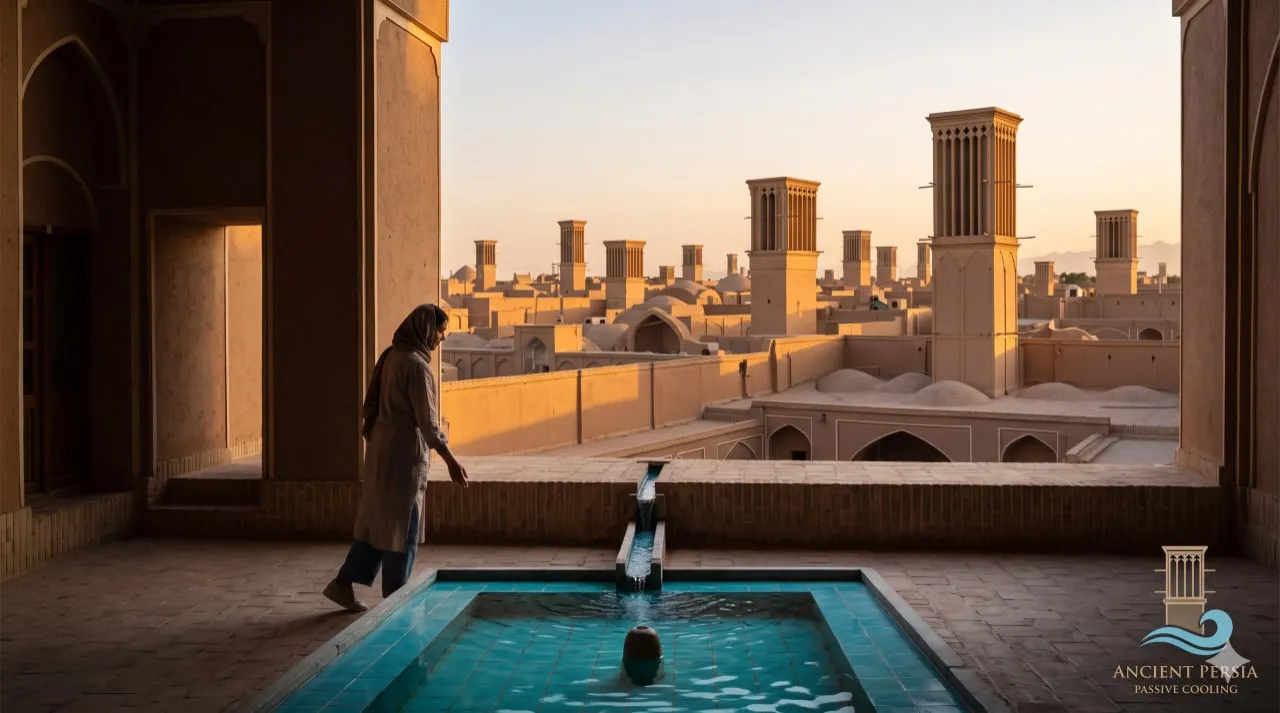
Yazd, a UNESCO World Heritage mud-brick city located in the central plateau of Iran, has thrived for centuries in a hyper-arid environment without consuming electricity for climate control. By mastering passive cooling techniques, ancient Persian engineers designed architectural marvels that effectively combat extreme summer temperatures exceeding 45°C. This travel guide explores how the systematic synergy of windcatchers (Badgirs), underground water channels (Qanats), and high thermal mass materials creates a fully sustainable urban ecosystem. Understanding these historic, zero-emission structures provides an invaluable blueprint for modern eco-friendly urban design and energy-independent living.
How Does Yazd’s Ancient Zero-Electricity Cooling System Work?
Yazd’s ancient climate control system achieves passive cooling by integrating three elements: architectural windcatchers (Badgirs) that capture high-altitude breezes, subterranean Qanat water channels that introduce moisture for evaporative cooling, and thick adobe walls that act as a thermal shield. This interconnected network utilizes natural atmospheric pressure differentials and the stack effect to lower indoor ambient temperatures by 10°C to 15°C below the scorching desert exterior without mechanical intervention.
The Architectural Shield: Mud Bricks and Shaded Alleys

The primary defense against oppressive desert radiation lies in the building materials. Traditional structures in Yazd are constructed entirely from adobe, a sun-dried mud brick mixed with thatch and clay. Adobe possesses an exceptionally high thermal mass, meaning it absorbs solar heat throughout the day but releases it slowly, preventing thermal energy from penetrating interior living spaces during peak hours.
The urban layout complements this material advantage. The historic core features a dense network of narrow, winding alleyways known as kuchehs. These paths are regularly spanned by vaulted overhead arches called sabats, which cast deep, continuous shadows across the ground. This deliberate arrangement reduces ambient surface temperatures and protects pedestrians from the direct midday sun.
Harnessing the Sky: The Mechanics of the Badgir
Rising prominently above the flat rooflines of Yazd are the iconic badgirs, or windcatchers. These vertical brick towers function as the lungs of the city’s residential and public architecture, acting as precursors to modern HVAC ventilation units.

A windcatcher operates by capturing cooler, faster high-altitude breezes through open vents at the top of the tower. The air is funneled down internal shafts into the building. When there is no wind, the tower relies on the chimney effect: solar heat warms the brickwork at the summit, causing stagnant hot indoor air to rise and escape, drawing cooler air up from shaded courtyards.
(Image Insert: Geometric structure of a traditional Yazdi badgir guiding atmospheric airflow downwards)
The Subterranean Arteries: Engineering the Qanats
A cooling framework dependent solely on dry desert wind cannot achieve full thermal comfort without moisture. To introduce humidity, ancient engineers looked underground, tapping into distant mountain aquifers via the qanat system.

Qanats are hand-dug underground aqueducts built with a highly precise, gentle slope. Because these channels run deep beneath the desert surface, the mountain water is completely shielded from solar evaporation. The water arrives inside the city limits crystal-clear, icy cold, and ready to drive thermal regulation systems.
(Image Insert: Subterranean cross-section showing gravity-fed water flowing through an ancient Persian qanat)
The Perfect Convergence: Wind and Water Intersecting
The ultimate stroke of engineering genius occurs where the downward air current from a badgir meets the chilled water from a qanat channel. As dry desert air passes directly over the subterranean streams or indoor holding pools, rapid evaporative cooling occurs. The air drops its sensible heat, absorbs moisture, and descends into the shabestan—deep, vaulted basements that remain cold throughout the summer.
| System Component | Physical Mechanism | Primary Material | Core Function |
| Badgir (Windcatcher) | Pressure drop & stack effect | Brick, mortar, plaster | Captures high-altitude wind; evacuates stale indoor heat. |
| Qanat (Aqueduct) | Gravity-fed horizontal flow | Excavated earth, stone | Transports unevaporated mountain water to urban centers. |
| Adobe Walls | High thermal mass insulation | Sun-dried mud, thatch | Absorbs daytime radiation; radiates heat slowly at night. |
| Sabat (Arched Alleys) | Solar shading & path stability | Clay brick | Prevents solar gain on streets; maintains street microclimates. |
Experiencing Sustainable Living Architecture Firsthand
Yazd is not an abandoned archeological site; it is a living city where these historic systems continue to function. Many ancestral merchant homes, residential palaces, and desert caravanserais have been restored and converted into immersive boutique hotels. Staying in these locations allows travelers to observe passive thermal regulation in real time.
For travelers looking to explore these sustainable structures safely and efficiently, using local reservation networks is highly recommended. Consulting an authentic Iran hotel booking guide via established regional platforms like Eghamat24 simplifies the process, offering verified access to historic mud-brick accommodations right in the heart of Yazd’s UNESCO zone.
Conclusion
Yazd’s zero-electricity cooling infrastructure demonstrates that harsh climate challenges can be solved entirely through sustainable architectural design rather than heavy energy consumption. The structural harmony between windcatchers, subterranean qanats, and high thermal mass adobe forms a reliable, closed-loop network that has preserved desert civilization for thousands of years. As modern urbanization faces strict resource limits and rising global temperatures, analyzing these ancient Persian systems offers critical parameters for green, passive construction. Experiencing these historic spaces firsthand provides an invaluable perspective on the future of energy-independent living.
Frequently Asked Questions
1. Do windcatchers still function on days with zero wind?
Yes, windcatchers rely on the chimney or stack effect during calm days; hot indoor air naturally rises out through the top of the tower, creating a low-pressure draft that pulls cooler air up from shaded lower levels.
2. Why was adobe selected as the main building material in Yazd?
Adobe features high thermal mass, which slows heat transfer. It stores massive amounts of daytime solar radiation within the thick walls and releases it only after nightfall when desert temperatures drop drastically.
3. How do qanats move water across desert terrains without pumps?
Qanats are engineered with a highly precise, downward slope that relies completely on gravity. Water flows naturally from elevated mountain water tables down to lowland urban centers over distances spanning dozens of kilometers.
4. What is a shabestan and how effectively does it cool?
A shabestan is a deep, underground basement chamber commonly found in Yazdi architecture. Situated 6 to 12 meters underground and integrated with wind and water lines, it stays 10°C to 15°C cooler than the ground surface.
5. Are these ancient passive systems still actively used in Yazd?
Yes, many structures in Yazd’s historic core still use active windcatchers and qanat connections to supplement modern cooling systems, substantially lowering overall urban electrical grid demands.